 info@locksmithineastlondon.co.uk
 +44 7985423971
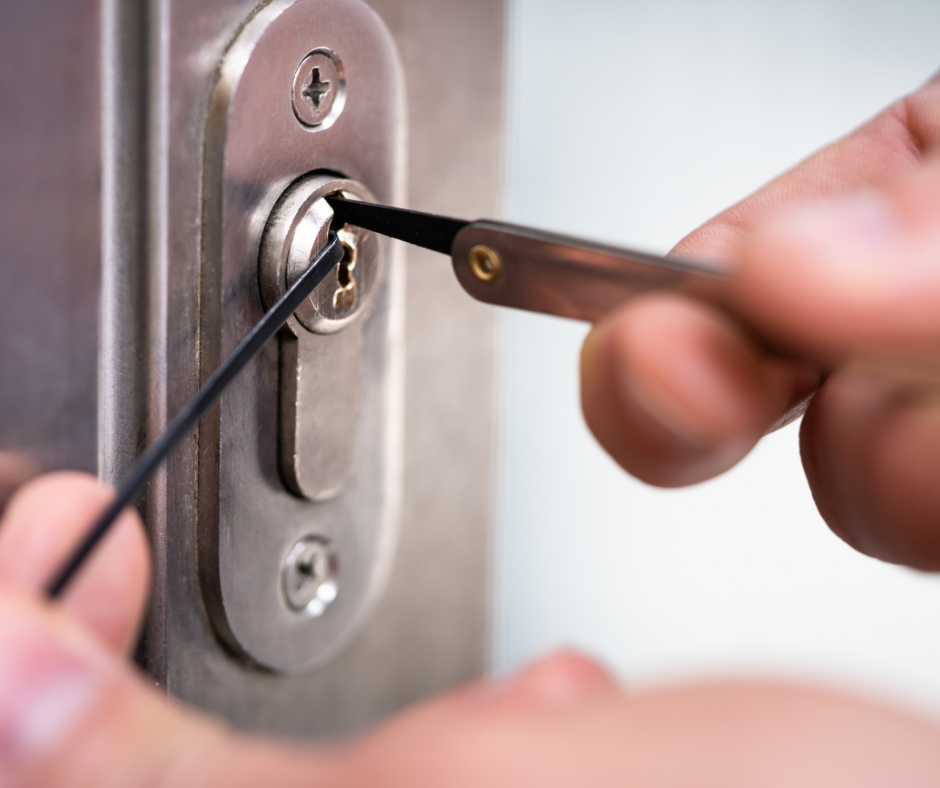
When you search online for a locksmith in East London — perhaps because you’re locked out, lost your keys, or need a lock replaced — you inevitably come across many adverts and websites. One such site is [locksmithineastlondon.co.uk], which markets itself as a 24/7 emergency locksmith service for East London and parts of Essex.
Given how common — and risky — locksmith scams have become, it is important to analyse businesses like this carefully, to understand what they claim, and to know what to check before hiring them. This article does just that: it reviews the publicly posted claims of the company, outlines what we do know, what remains unclear, and provides guidance (based on industry-wide best practices) for evaluating any locksmith before you use them.
What the Website Claims
Company identity & services
According to the website:
- The business trades under the name Locksmith in East London, legal entity Locksmith in East London Ltd, Company Number 16807003. Locksmith in East London
- They advertise “24/7 emergency locksmith services” covering East London and parts of Essex. Locksmith in East London
- They say they can help when you’re locked out, if you lost or broke your keys, or need a lock installed — whether for a home, rented property, or business. Locksmith in East London
- Their stated aim is to respond quickly — “approximately 20 minutes, depending on location and traffic conditions.” Locksmith in East London
- Lock-fitting and replacement services include a range of lock types: night latches, Euro cylinder locks, deadlocks, sash locks, door handles, letterbox cam locks, internal & external doors, etc. Locksmith in East London
- They also claim “no call-out fees”: you pay only for the work done. Locksmith in East London
- On the “About / Terms” page, there are disclaimers: no key-cutting or duplication services; no “repair mechanism services” (i.e. they won’t undertake repair or modification of lock mechanisms or related hardware components beyond fitting/replacing a lock) under their definition. Locksmith in East London
Geographic coverage
The site lists a wide area of coverage across East London and surrounding regions — many boroughs, neighborhoods, and suburbs: from Central East London (Tower Hamlets, Whitechapel, Stratford, etc.) to Greater London/Essex outskirts (Ilford, Wanstead, Woodford, Enfield, Chingford, etc.). Locksmith in East London
Tone and presentation
The website is structured to appear professional: there is a clear company statement, a local-sounding company number, a menu with “Home / About / Services / Areas Covered / Blog / Contact,” and policies (terms, privacy, cookie). The presentation is typical of many small trades-service providers. Locksmith in East London
All of the above suggests that on paper, Locksmith in East London aims to offer a normal, legitimate locksmith service to a large part of London and Essex, including emergency call-outs and lock-fitting/installation services.
What Public Records & Independent Sources (Don’t) Show
Despite the niceties of the website, a robust evaluation requires independent evidence beyond a company’s own claims. Unfortunately:
- I found no strong, verifiable third-party reviews or ratings linked to this company on major trusted review platforms (at least none that clearly match the company name or company number).
- I did not find credible listings on major “find a locksmith” directories that refer to the company as an established local licence-holding locksmith of record.
- Broader context is that the locksmith industry in the UK remains largely unregulated. As a result, many businesses operating as “locksmiths” have no formal licensing requirement. Wikipedia+1
Because of this, a company website (no matter how professionally designed) is not by itself proof of legitimacy, good practice, or trustworthiness.
Why There Is Heightened Risk: Locksmith Scams in the UK
Understanding the broader risks helps put the lack of independent evidence in perspective. Below are some recurring problems in the UK locksmith industry — why vigilance matters, especially when using emergency call-out services.
1. The industry is unregulated
- The lack of mandatory licensing means that “technically anyone can call themselves a locksmith,” even without training or qualifications. Wikipedia+1
- This makes it possible for unscrupulous people to set up fake or transient “locksmith” businesses, targeting people who are locked out — often vulnerable shoppers in haste or distress. Which?+2Wikipedia+2
2. Common scam patterns — “bait & switch”, “drill-and-fill”, over-charging
- A well-documented scam pattern: rogue locksmiths advertise very low prices online (e.g. £39, £49, £59), to lure people in. Once at the door, the customer is told the problem is worse than expected, then presented with a bill that may run to hundreds or thousands of pounds. Master Locksmiths Association+2The Guardian+2
- In some cases, the locksmith might drill the lock immediately (even if it could be opened non-destructively), then demand payment before restoring access — sometimes refusing to leave until paid. The Guardian+2Wikipedia+2
- Overcharging for emergency or “out-of-hours” services is another frequent complaint. According to a recent report, the average charge by legitimate locksmiths for emergency call-outs tends to be around £80–£100 per hour (depending on time), but rogue locksmiths have charged victims sums from hundreds up to several thousands of pounds. The Guardian+1
3. Fake accreditation or misuse of reputable association logos
- Some rogue operators use the logos of reputable trade bodies (or claim to be “approved”) — even though they have no real association, training, or identity. Master Locksmiths Association+2Master Locksmiths Association+2
- Because the industry is not regulated, using a logo does not guarantee proper vetting, licensing, or reliability. A genuine company with real accreditation should be easy to verify independently. Master Locksmiths Association+2banham.co.uk+2
4. Fake or non-existent physical addresses, subcontracting, call -centre setups
- Some “companies” are in fact fronts for call-centres that dispatch subcontractors whose identity and credentials are unknown and unverifiable. Master Locksmiths Association+1
- Fake addresses and multiple “business names” tied to the same phone number are common — another red flag of a rogue operation. Master Locksmiths Association+1
5. Using desperation and inconvenience to exploit customers
- The worst-case examples often involve customers calling in emergency — locked out, lost keys, odd hours — being vulnerable, with limited ability to shop around. That gives scammers leverage to overcharge, use hard-sell tactics (e.g. “must drill now, otherwise you’ll never get in”), and demand immediate payment (sometimes cash-only), making it hard to dispute or reverse charges. Which?+2The Guardian+2
Because of these issues, many consumer-advice bodies and industry associations urge caution — especially when a locksmith is selected under emergency conditions or via quick Google search. banham.co.uk+3Master Locksmiths Association+3locksmithsleedslocksmiths.co.uk+3
What This Means for “Locksmith in East London”
Given the general risks, what is the significance for Locksmith in East London? Here’s how to interpret the situation — what looks okay, what is uncertain, and what you should check carefully if you ever decide to use them (or a similar company).
✅ What looks (on paper) acceptable / normal
- The company lists a UK company number (16807003), which suggests it is at least formally registered. Locksmith in East London
- The site is reasonably well-structured, with a clear scope of services, a defined service area, and a defined set of limitations (e.g. no key-cutting, no repair-mechanism services). Locksmith in East London
- The services offered (lock-fitting, replacement, emergency entry, lock types) are consistent with what a typical legitimate locksmith would provide. Locksmith in East London+2banham.co.uk+2
- The stated aim to respond quickly (approx. 20 min depending on traffic) is plausible as a marketing offering — many legitimate London-based locksmiths advertise prompt response times.
These all suggest that the company is structured like a “normal locksmith business” on the surface.
⚠️ What is unknown or lacking
- No independently verified customer reviews — at least none easily found that clearly map to the company name/number. That makes it difficult to assess track record, reliability, or quality of work.
- No evidence of accreditation — the website does not explicitly claim membership of a trade association such as the Master Locksmiths Association (MLA), and I found no record of the company listed as an approved MLA locksmith in public directories. Given that the locksmith industry in the UK lacks formal regulation, this is a notable gap. Master Locksmiths Association+1
- No visible physical address or independent contact details beyond phone / email — which raises the general problem that many “locksmith” businesses operate under similar-sounding names, or use call-centers or subcontractors. This makes it harder to hold them accountable if something goes wrong.
- No proof of insurance or liability cover — a legitimate locksmith should be able to show proof of public liability insurance (or equivalent) to cover any accidental damage during work. I found no mention of this on the website. Jet Locksmiths+1
- No third-party verification — given the public-record limitations, there is no independent audit or verification (e.g. from a trade association, consumer-protection body, or local council) that confirms they operate to accepted standards.
Given these unknowns — no reviews, no accreditation, no independent verification — it is difficult to treat the company as clearly “safe and recommended.”
Best Practice: What to Do If You Contact Them (or Similar Locksmiths)
If you decide to use Locksmith in East London — or any similar locksmith found online — you should treat the contact as you might any potentially risky or unverified service: with caution, and with steps taken to protect yourself. Here is a checklist of good practice (based on widely accepted guidance among locksmith-industry experts):
🔎 Pre-Engagement Checks
- Ask for accreditation
- Ask whether they are members of the MLA (or another reputable industry body).
- Ask for proof (membership number, link to directory, credentials). Under UK rules, legitimate accreditation is by bodies like the MLA — but since locksmithing is not regulated by government, accreditation is voluntary. Master Locksmiths Association+2Wikipedia+2
- Request public liability insurance
- A responsible locksmith should be insured to cover accidental damage to your property during work. Ask to see a copy. Jet Locksmiths+1
- Ask for a written estimate, with all costs laid out
- Get a clear breakdown of expected costs (labour, parts, call-out, potential extras) before they start work.
- Avoid firms giving only a vague “from £XX” price over the phone. Extremely low advertised prices (e.g. under £50) are a common red-flag. Master Locksmiths Association+2locksonsealocksmiths.co.uk+2
- Verify identity and address on arrival
- Ask the locksmith to show ID and business credentials.
- Check whether the business has a verifiable physical address (not just a PO box or unverified mailbox). Master Locksmiths Association+2Master Locksmiths Association+2
- Inspect the tools and work approach — avoid immediate drilling
- Skilled, legitimate locksmiths will often be able to open locks without destructive drilling. If the first approach is to drill, that’s a warning sign. absolutesecuritylocksmiths.co.uk+2Wikipedia+2
- Prefer payment methods that give traceability
- Pay by credit card or other traceable method if possible, to help in dispute resolution later. Avoid cash-only demands if possible. kmilocksmiths.co.uk+1
- Document everything
- Take a photo of the locksmith’s ID, name, van number, work done, used parts. Request a written invoice once done.
- Research independently before an emergency arises
- Instead of searching when locked out, pre-save contact details of a trusted, verified locksmith (ideally MLA-approved) — that reduces the pressure and time to vet them in a crisis. Master Locksmiths Association+2locksmithsleedslocksmiths.co.uk+2
⚠️ If Something Feels Off — Be Ready to Refuse or Walk Away
- If the locksmith refuses to show ID, gives vague or changing pricing, insists on drilling immediately, or demands payment before finishing work — these are all strong warning signs. Consider calling another locksmith (preferably one you already verified).
- If they ask for cash only and resist other payment methods, treat that with suspicion.
- If you suspect a scam or poor practice, you can check with consumer-protection bodies, report to the trade association (if they claimed membership), and consider filing a complaint.
Broader Reflection: Why Transparency & Verification Matter in Locksmith Services
The case of Lorem (or rather “Locksmith in East London”) is not unique. Across London and the wider UK, many small locksmith firms — or apparent firms — operate under minimal regulation, relying on attractive online adverts and quick response promises. At the same time, fraud and “rogue-trader” incidents are on the rise. According to a recent article, reports of fraudulent locksmiths have increased substantially: entry-level adverts at £49 have led to bills over £1,400 in some cases. The Guardian+2Which?+2
Because of this environment, it is essential for consumers to approach locksmith services with due diligence. The lack of industry-wide licensing means that beyond trade-association accreditation (which itself is voluntary), the only reliable safeguards are transparency, documentation, and informed personal judgment.
Trade associations such as the MLA attempt to fill the void: they vet and inspect their members, carry out background checks (e.g. DBS checks), and maintain a directory of approved locksmiths. Master Locksmiths Association+2Wikipedia+2 But given that membership is optional, a company’s failure to advertise MLA membership — or a lack of independent record — warrants caution.
In short: for services as sensitive as unlocking homes, changing locks, or allowing access to properties, trust matters — and trust should be earned, not assumed.
Verdict: “Locksmith in East London” — Potential, but Proceed With Caution
Based on what the publicly available website shows, Locksmith in East London appears structured enough to be a plausible, small-scale locksmith business. The company number and the list of services lend some legitimacy, and the coverage area and services offered correspond with what a typical emergency locksmith might provide.
However, the lack of independent reviews, no visible accreditation or insurance proof, and the broader context of unregulated locksmithing in the UK means that one cannot confidently treat the company as “safe and recommended.”
If you decide to use them (or any similar online-found locksmith), treat it as choosing a contractor with some uncertainty: use the pre-engagement checklist above, demand transparency, document everything, and consider safer alternatives if anything feels off.
In practice: treat the call-out like a small construction or repair project. Don’t rely only on their website or promises — verify whenever possible.
Recommendations: What I’d Do (If I Was Hiring a Locksmith in East London)
If I were in need of a locksmith in East London right now, I would:
- First try to find an MLA-approved locksmith via the official MLA directory (or other reputable independent directory), to minimise risk.
- If using a less well-known or new company (like Locksmith in East London), call ahead — ask pointed questions about accreditation, insurance, typical hourly rates, tools, and identification.
- Avoid paying in cash if possible; prefer a traceable payment method.
- Ensure I get a written quote and written invoice. If they can’t or won’t provide one, walk away.
- If possible, take photos or notes of the locksmith’s van, ID, the work done — just in case there’s a dispute later.
- Save contact details of a trusted locksmith ahead of time (before any emergency), so I’m not pressured to choose based on search results in the moment.
Why This Analysis Matters (Beyond a Single Company)
The situation of Locksmith in East London exemplifies a broader structural problem: the lack of regulation in critical home-security services in the UK. Because locksmithing isn’t regulated by the government, many people — in moments of stress, panic, or urgency — may end up calling someone with little accountability.
This matters because mistakes, deception, or malicious intent can lead to:
- Damage to property (e.g. unnecessary drilling, poor workmanship),
- Financial exploitation (overcharging, inflated invoices),
- Security vulnerabilities (poorly installed locks, re-use of keys), or
- Psychological stress (pressure, intimidation, being refused entry until paid).
Therefore, it is in every consumer’s interest to treat locksmith services as they would any sensitive professional service: with caution, verification, and documentation.
At the same time, there are legitimate locksmiths out there, who operate professionally and transparently. The challenge is to distinguish them from the rogues — and to build awareness so that people don’t have to make that judgement under pressure.
Final Thoughts
“Locksmith in East London” could be a legitimate local locksmith business — but the publicly available evidence is too sparse to confirm that confidently. Until or unless independent reviews, accreditation proofs, or verifiable references emerge, any use of the company should be done with due diligence.